Fashion Borrows. Culture Pays.
On hip-hop, extraction, and the question the industry still won't ask.
17 years.
That's how long it took to finally make sense of my purpose.
This past Friday, I listened to a BoF podcast featuring their in-house reporter, Lei Takanashi, on how fashion picks its hip-hop style icons. "I think that's an issue with how generally fashion is a business that extracts culture but doesn't necessarily give back to it as much as we'd like for the industry to," said Takanashi. "I think they put rappers in the front row, and they put artists in campaigns. But I think you wonder who's making these decisions? And it's usually not people who are necessarily truly invested in the culture as others may be."
There was a period when I struggled to define what the next phase of my journey looked like. I handed in my journalism hat for roles at commercial institutions. Holding down a 9-to-5 isn't new, but at some point, the work moved so far from my thesis that returning to the industry showed me how much tougher it really is. Then I noticed that Business of Fashion started covering the content I'd been banging on about from my journalism days. They noticed the relationship between fashion and hip-hop because the latter is no longer an underground market—it's a multi-billion dollar industry with an embedded sphere of influence. The problem, though, is that fashion is an institution built on elitism. It was never meant for everybody.
But rappers—particularly Black rappers—never sought permission from fashion. Their rise in wealth gave them the right to claim a status symbol that was rightfully theirs. They had the money to buy luxury, so they did. And they flossed it. In retrospect, that's actually how a lot of rappers became famous. Jewelry in hip-hop, even in its heyday, was essentially Neville Goddard's living in the end theory passed down through generations—dress for the life you're claiming, not the one you're in. Now it has become almost a standard point of entry, which is both a gift and a curse. Nonetheless, rappers never sought fashion's endorsement. If you're familiar with the '80s and '90s era of hip-hop, you already know.
Then you had the Beyoncés, the Aaliyahs, the Ushers, and the Rihannas—R&B artists with a hip-hop edge—which made it more appealing for fashion brands to tap into the culture. The biggest turning point was Justin Timberlake, who leveraged Black musical producers and collaborators—Timbaland and Pharrell/The Neptunes—to build crossover appeal that brought hip-hop's aesthetic into spaces where fashion was already paying attention. Justin Bieber, Nicki Minaj, The Weeknd, and Drake extended that reach further, but Timberlake opened the commercial door.
Extraction is a real problem. Fashion is known for its scarcity and limited access, which makes it so sought after. This puts fashion in a position to take without caring to give back, because it knows its place in the world.
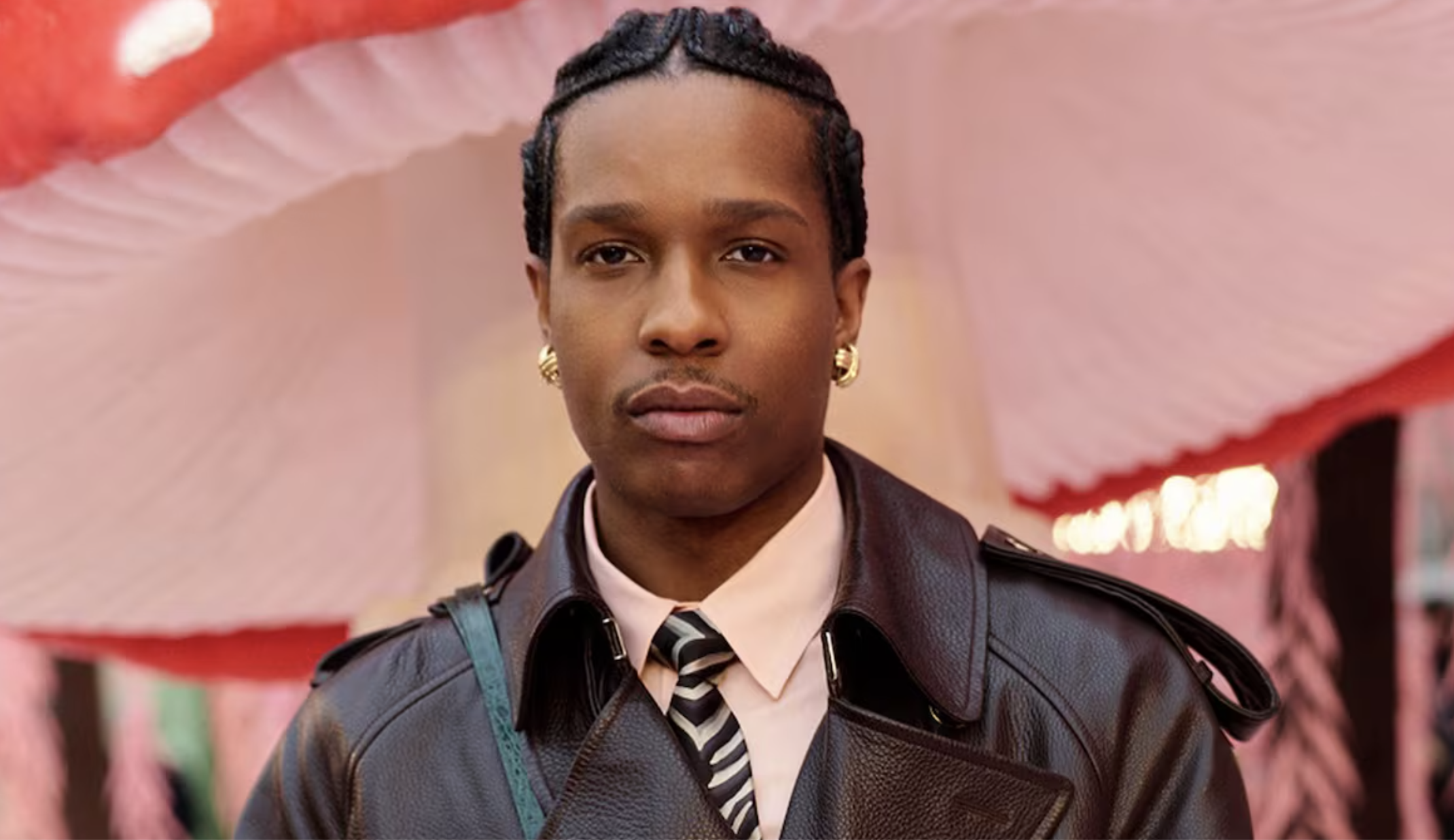
What I found interesting in the podcast was the discussion featuring A$AP Rocky as a central figure—not because fashion discovered him, but because he represents what it looks like when someone arrives on their own terms. Rocky has always had an intent of crossing over into fashion. His affiliations—including his life partner—center around aesthetics and taste.
A$AP World was a symbol of style before any brand came calling. The partnerships are an extension of an ecosystem that the Harlem-born rapper already had in place. His relationship with fashion started early: Rocky grew up wearing Guess in Harlem, later mining the brand's archives to build a collaboration in 2016 that reconnected Guess with the hip-hop culture that had built its credibility in the first place. That's a very different language from the common pathway for many young rappers who learn style through a team of stylists and creative directors after fame.
I have to acknowledge Takanashi's perspective. He's not Black, but he's a POC from New York who paid his dues through publications like Mass Appeal. and Complex He grew up inside New York's hip-hop infrastructure in a way I was building from the outside—trying to hold those conversations in London and Toronto, places that were cultural hubs but didn't have the established infrastructure to connect fashion and hip-hop within the same space.
But where I've arrived—after 17 years—is a clearer understanding of what the industry still hasn't named. Fashion extracts. It has always been extracted. And the question nobody in that podcast asked is the one that actually costs something:
Who inside these brands has the standing to tell them when they've taken too much?
